
Let's talk about your credit score. You know, that mysterious three-digit number that seems to follow you around whenever you're applying for a credit card, buying a car, getting a mortgage or even trying to secure a loan.
Your credit score is more than just a number. It's one of the tools lenders use to help assess how you've managed borrowed money and how likely you are to repay it. It can influence whether you're approved for credit and the interest rate you're offered. And when you're borrowing a significant amount of money, like when buying a home or a car, that can make a real difference to your finances.

The good news? You don't need to be a financial expert to understand how credit scores work. Once you know what influences your score, how to check it and which habits can help or hurt it, you can take greater control of your credit health.
So, let's take the mystery out of that three-digit number. We're breaking down what a credit score is, the five factors that influence it, how you can check yours for free and five common myths you need to stop believing.
What exactly is a credit score?
Think of your credit score as your financial report card for borrowing money.
It's a three-digit number, generally ranging from 300 to 900 in Canada, that gives lenders an indication of how likely you are to repay money you borrow.
Your score is calculated using information in your credit report, which tracks how you've managed credit over time. This includes things like credit cards, loans, mortgages, payment history and outstanding balances.
Lenders use this information to help determine whether they'll approve you for credit and what interest rate or terms they'll offer.
Generally, the higher your score, the more favourably lenders may view your application. However, your credit score isn't the only thing they consider. Your income, existing debt and overall financial situation can also play a role.
How is your credit score calculated?
Here's where things get interesting. Your credit score isn't based on just one thing. Several factors contribute to the final number.
While the exact formula varies between credit bureaus and scoring models, Equifax provides the following general breakdown of five common credit-scoring factors.
The five factors that influence your credit score
Your credit score isn't determined by just one thing. It's calculated using several factors that help lenders understand how you manage borrowed money. Some carry more weight than others, and knowing what they are can help you make smarter decisions about your credit.
From paying your bills on time to keeping your credit card balances in check, let's break down the five key factors that can influence your credit score, and what you can do to keep each one working in your favour.
Here are the 5 factors that influence your credit score:
1. Payment history – 35%
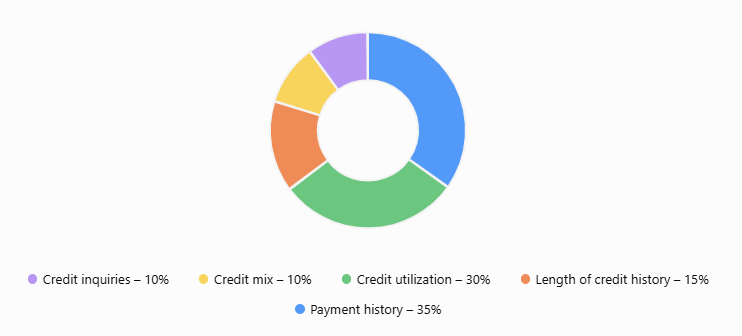
The 5 elements of a credit score
This is the big one! It looks at whether you pay your bills on time. Late or missed payments can negatively affect your score, so making payments by their due dates is one of the best habits you can develop.
2. Credit utilization – 30%
This measures how much of your available revolving credit you're using. For example, if your credit card limit is $10,000 and your balance is $3,000, your utilization is 30%.
A good rule of thumb is to aim to use less than 30% of your available credit.
3. Length of credit history – 15%
How long have you been managing credit? A longer history can help demonstrate that you have experience managing borrowed money responsibly.
4. Credit mix – 10%
This looks at the different types of credit you manage, such as credit cards, lines of credit, mortgages and loans. Demonstrating responsible management of different credit types can help.
5. Credit inquiries – 10%
When you apply for new credit, lenders may make what's called a hard inquiry on your credit report. Multiple applications within a short period can negatively affect your score.
Source: Equifax Canada. These percentages are a general educational breakdown, not a universal formula used by every lender.
How can you check your credit score?
Here's some good news: you don't have to pay to find out where you stand!
Canada has two main credit bureaus: Equifax and TransUnion. Both maintain credit reports, and you can access your report for free.
Equifax: Offers free online access to your credit report and credit score across Canada.
TransUnion: Offers free credit reports, and residents of Quebec and Ontario can access their credit score through their free Consumer Disclosure.
You may also be able to access your credit score through your financial institution's online banking platform.
My recommendation? Check both reports periodically. The information can differ between bureaus, and reviewing your reports helps you catch errors, unfamiliar accounts or potential signs of identity theft.
And here's something worth remembering: checking your own credit score does NOT lower it. That's considered a soft inquiry.
Five credit score myths you need to stop believing
There's a lot of misinformation about credit scores. Let's clear up a few common misconceptions.
Myth #1: Checking my own credit score will lower it.
FALSE! Checking your own score is a soft inquiry and does not negatively affect your credit score. Go ahead and check it regularly.
Myth #2: I need to carry a balance on my credit card to build credit.
FALSE! You don't need to pay interest to build a credit history. Using your credit card responsibly and paying your balance in full by the due date is a smart habit.
Myth #3: If I make good money, I'll automatically have a good credit score.
FALSE! Your salary isn't a factor in calculating your credit score. What matters is how you manage your credit obligations. A high income doesn't guarantee a high score.
Myth #4: I only have one credit score.
FALSE! You can have different scores depending on the credit bureau and scoring model being used. Don't be surprised if your Equifax and TransUnion scores aren't identical.
Myth #5: Closing an old credit card will improve my credit score.
NOT NECESSARILY! Closing an account can affect your available credit and overall utilization ratio. It may also influence your credit history over time. Consider the potential impact before closing an account.
The bottom line
Here's the bottom line: your credit score isn't something to fear, and it's not a reflection of your worth or how successful you are financially. It's simply a snapshot of how you've managed borrowed money.
The good news? You can take steps to build and maintain a healthy credit history. Pay your bills on time, keep your balances manageable, apply for credit thoughtfully and review your credit report regularly.
Remember, building good credit takes time. Small, consistent habits can make a big difference.